
-
About
-
Products
- By Timber Product
- Cladding
- Decking
- Joinery
- Screening
- Panelling
- View all
- By Application
- Exterior Cladding / Siding
- Exterior Rain Screen
- Exterior Roofing
- Interior Walls & Ceilings
- Soffits
- Screening, Fins & Battens
- Windows, Doors & Joinery
- Posts & Beams
- Accessories
- Coatings
- Fixings
-
Resources
- Projects
- Contact





The Science Behind Sustainable Timber
A new study shows Western Red Cedar building timber samples from trees over 600 years old. Read the report.
At Abodo, we believe that feature timbers can stand for something, and their journey to your project, home or workspace matters. This got us wondering: what if timber could tell its own story? That’s why we commissioned Tree-ring Analysis of Western Red Cedar, a report by Dr Jonathan Palmer of Gondwana Tree Ring Laboratory in Rotorua.
In it, he explores the science behind tree ring patterns and what we can learn when we look deeper at what’s happening inside the materials that form our built environment.
Dendrochronology - A Hidden History
The science behind tree rings is known as dendrochronology. It’s a technique that helps us to accurately date trees and examine the patterns of the growth rings in the wood that comes from them. To a trained eye, dendrochronology can uncover the hidden history inside timber, enabling us to learn the exact felling date of a tree, the climate conditions during its lifetime, and specific environmental factors it faced during its life, such as temperature and rainfall.
The How and Why
To complete this study, Dr Palmer examined 10 Western Red Cedar (Thuja plicata) samples - sanded to reveal clear rings - that were randomly selected to represent a typical imported timber construction scenario. Abodo was given these samples by an Auckland builder, who sourced them from their existing stock of timber offcuts. The samples serve as a representative example of the Western Red Cedar used in ongoing construction projects.
Dr Palmer reduced the length of the selected offcuts to 2-3cm cross-sections for analysis and then microscopically examined them to count the tree rings and measure their widths with high precision.
The age and geographical origin of the timber samples were determined by comparing their ring-width patterns to known reference collections from around the region, consisting of calendar-dated samples producing tree-ring chronologies.
The aims of this study were to establish the age of the trees and to learn how fast they grew based on their tree ring widths, helping industry professionals to better understand the origin and historical context of this precious old growth timber that is still actively used on New Zealand building sites.
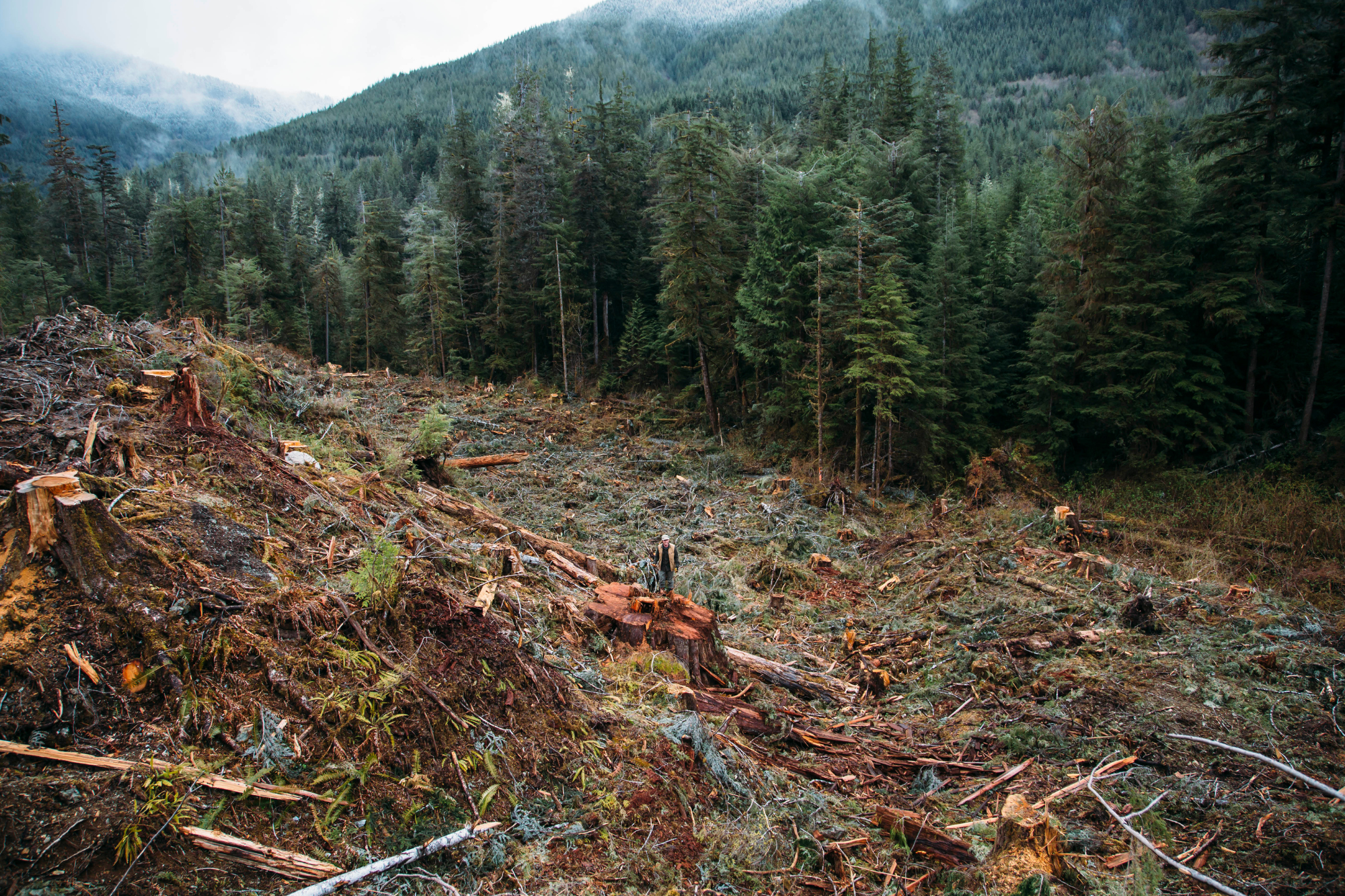
Western Red Cedar in BC, Canada. Photography credit: Joel Caldwell
What We Found
On average, the samples contained 80 rings, and showed low mean sensitivity values, indicating that the wood had a fine-grained visual appearance as typically favoured in architectural features. They matched well a Canadian reference chronology, confirming the area around Vancouver Island as their source.
In comparison, modern New Zealand radiata pine plantations, especially those managed with pruning and thinning to produce clearwood like the timber Abodo uses, are generally harvested every 25-30 years. This is evident in the timber itself; Radiata pine shows wide growth rings lacking visual character, whereas quarter-sawn Western Red Cedar has tight linear banding formed over a much longer time period.
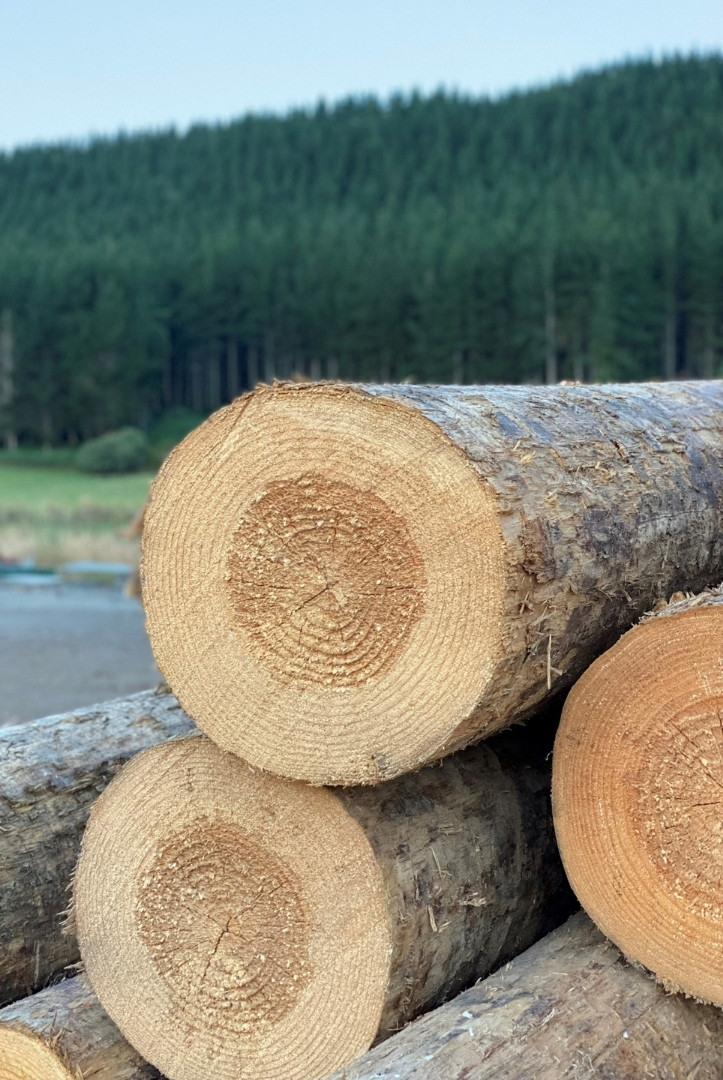
A cross section of a Radiata pine showing wide growth rings.
The real surprises emerged when Dr Palmer started diving into the age of these trees.
Three were found to be at least 400 years old and possibly as old as 600 years or more. One sample could be traced back to the year 1508!
This shows how old some trees being milled for timber actually are.
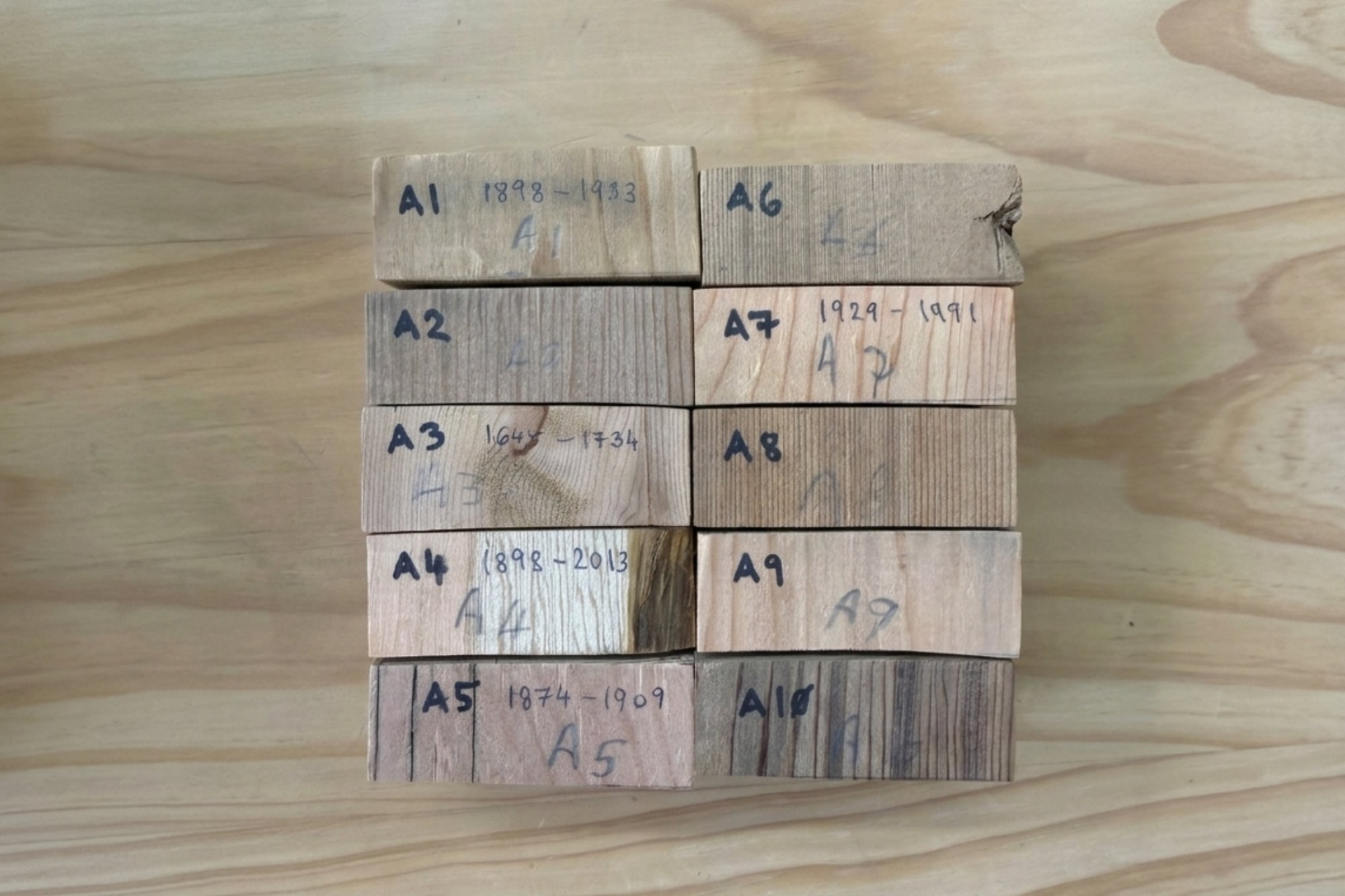
The 10 Western Red Cedar samples showing condensed growth rings
The Future of Building Materials Needs a Different Timeline
Tree rings are nature’s record of the past, and we saw through this study that some of New Zealand’s building materials have a much longer story than we realise.
Tree-ring Analysis of Western Red Cedar provides a powerful reminder that centuries-old trees continue to find their way into our modern supply chains.
This begs the question: should we still be cutting them down?
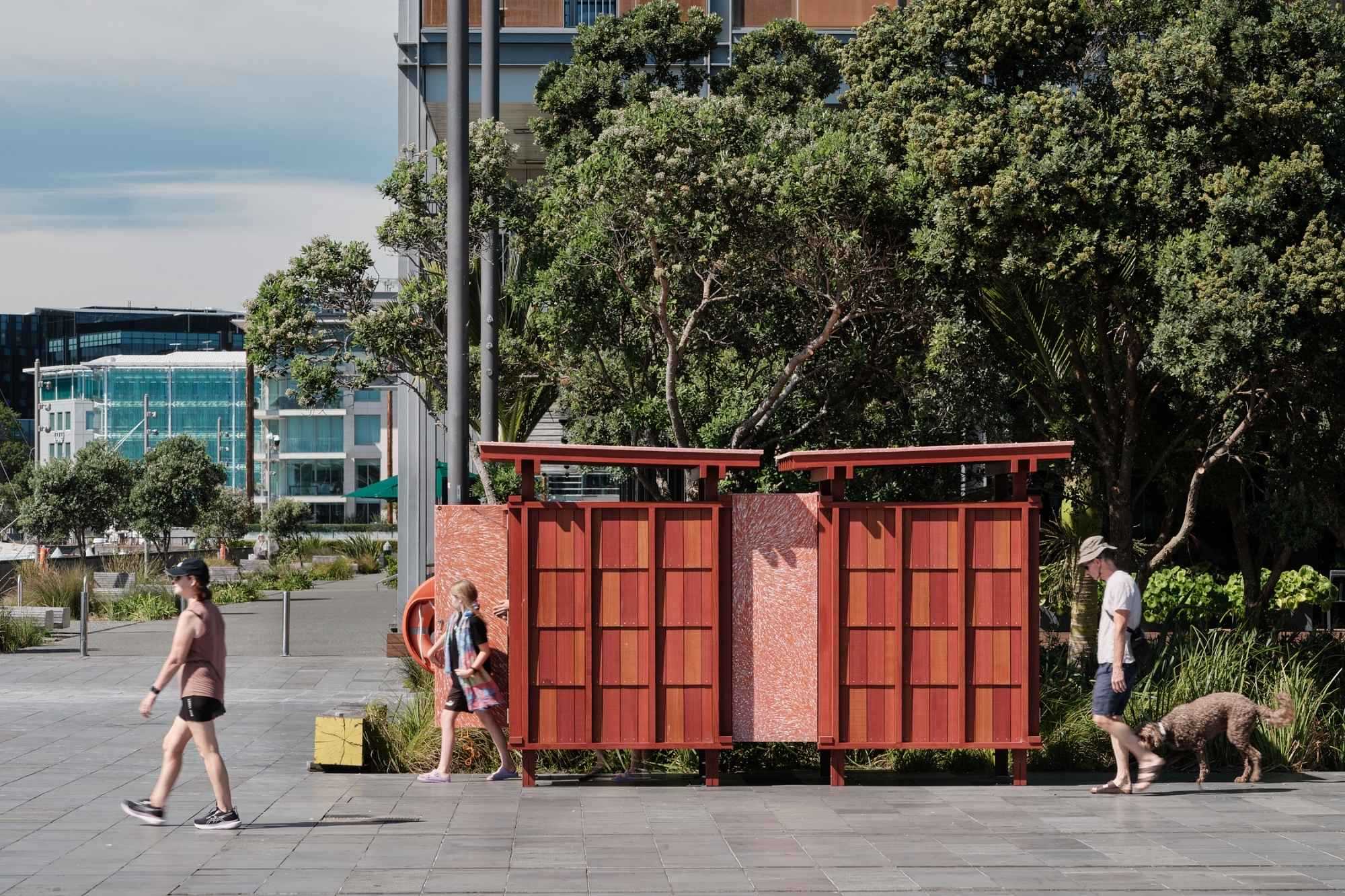
Sustainably sourced and carbon positive, Karanga Changing Sheds by Pac Studio
As an industry, it’s time to consider what we want the future of timber to look like. With Abodo New Growth Feature Timbers™, we can build that future responsibly, together. Our rapidly renewable, Forest Stewardship Council® (FSC®) certified timbers provide a genuine alternative to ancient old growth options, matching or exceeding traditional choices like Western Red Cedar in both beauty and performance.
Through innovation and sustainable growing practices, we can deliver feature timbers in decades, rather than cutting down centuries of history.
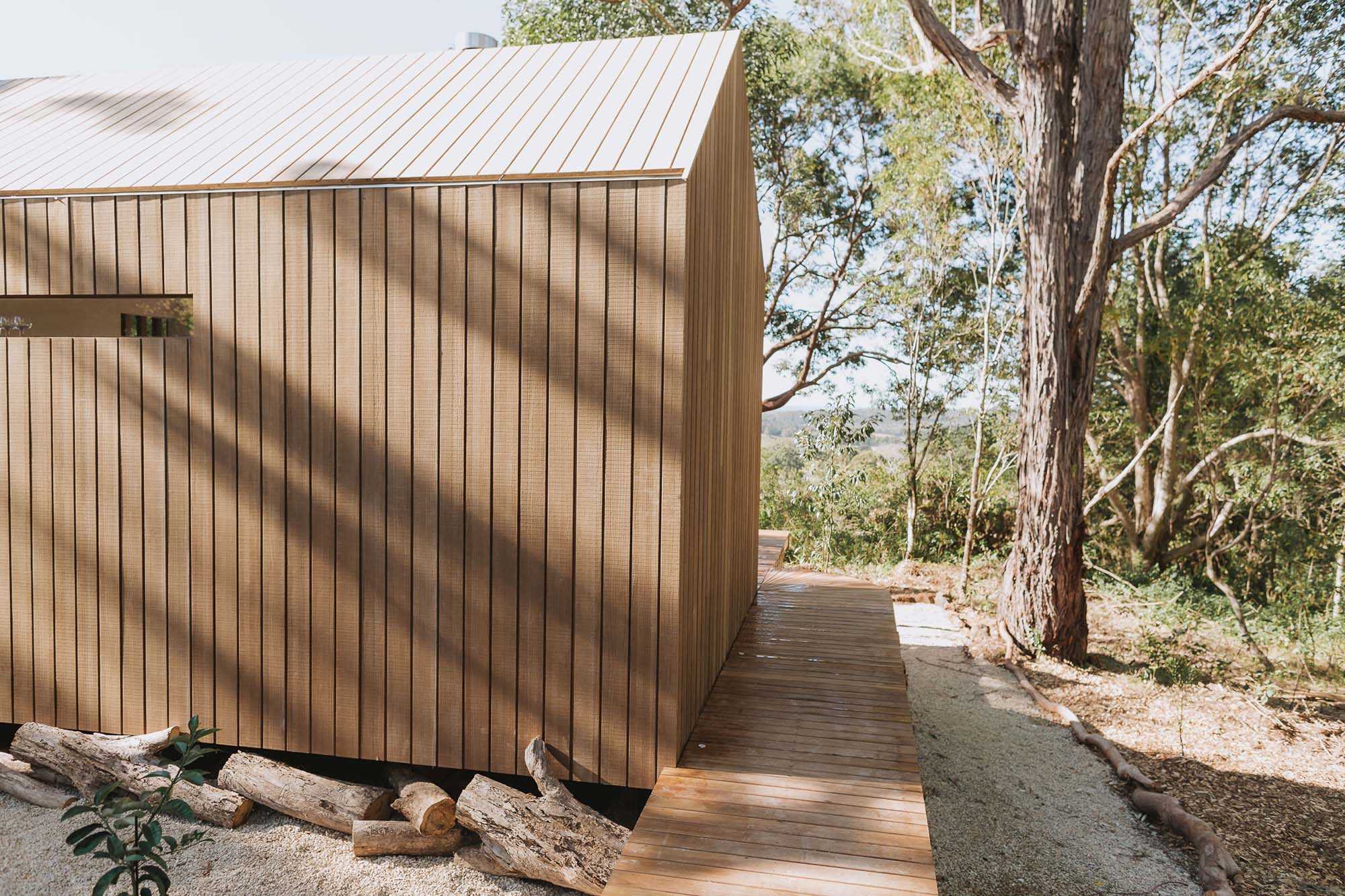
Abodo New Growth Feature Timbers™ provide a genuine alternative to ancient old growth options