
-
About
-
Products
- By Timber Product
- Cladding
- Decking
- Joinery
- Screening
- Panelling
- View all
- By Application
- Exterior Cladding / Siding
- Exterior Rain Screen
- Exterior Roofing
- Interior Walls & Ceilings
- Soffits
- Screening, Fins & Battens
- Windows, Doors & Joinery
- Posts & Beams
- Accessories
- Coatings
- Fixings
-
Resources
- Projects
- Contact



Four Reasons to Use Feature Timber Ceilings
A feature timber ceiling brings natural warmth, texture and architectural character to a space.
From a contemporary home extension to a workplace or hospitality interior, timber overhead can define how a room looks and feels.
Timber ceiling panelling offers four key benefits: less exposure to everyday wear, opportunities to shape the perception of space, relatively low maintenance in sheltered interiors, and a stronger connection to natural materials. Choosing a stable timber, such as Abodo Vulcan® Panelling, adds practical performance to that design appeal.
A successful timber ceiling needs to retain its architectural appeal as conditions change. Abodo Vulcan Panelling combines thermal modification with engineered vertical grain to enhance stability.
1. Natural timber character, with less everyday wear
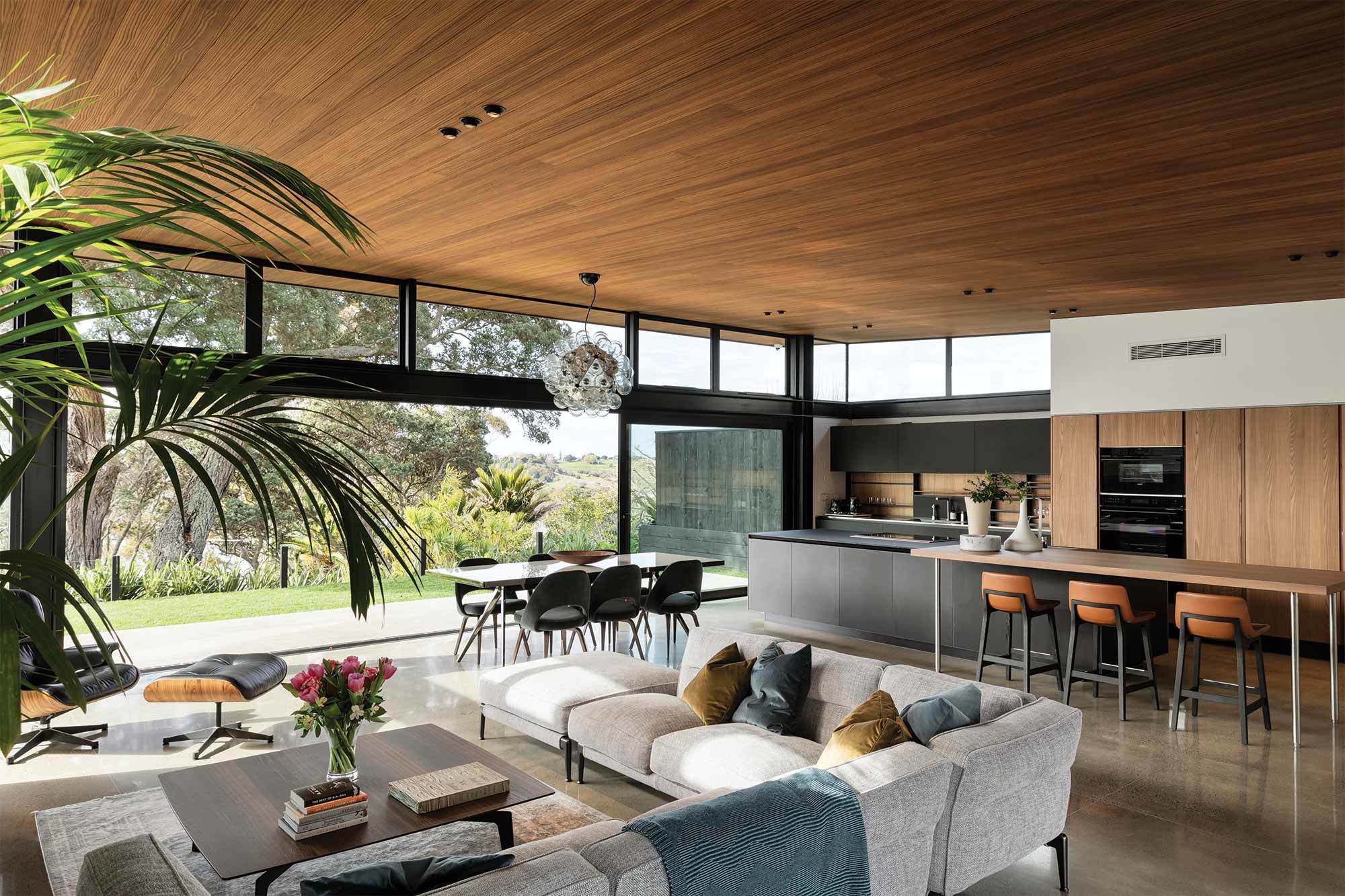
A ceiling offers a generous canvas for timber’s grain, colour and texture. Unlike timber flooring, ceiling panelling is protected from foot traffic, moving furniture and the abrasion of everyday use. This makes it an appealing way to introduce a substantial area of natural wood without the same exposure to scratches and impact damage.
In a kitchen extension, a timber ceiling can bring warmth above a dining area. In an entrance or living room, it can create a distinctive architectural feature that draws the eye upwards.
Abodo Vulcan Panelling is available in brushed and smooth dressed finishes, allowing designers to choose between a more textured surface and a refined appearance. Its distinctive vertical grain adds a consistent visual rhythm across the ceiling.
2. A ceiling that shapes the space
The direction, colour and extent of timber ceiling panelling can influence how a room is perceived. Boards running along a room’s length can emphasise its depth, while a continuous ceiling finish can connect different areas within an open-plan layout. A defined section of timber above a kitchen island or dining table can also establish a distinct zone without introducing walls.
The result depends on the design. Lighter finishes, daylight and carefully placed lighting can help create an airy atmosphere. Richer timber tones can give a high ceiling a more intimate, enveloping feel.
For UK homes with garden-facing extensions, repeating timber overhead inside and beneath a sheltered external soffit can create visual continuity through the glazing.
3. Lower maintenance in sheltered interior settings
An internal timber ceiling is generally protected from rain, direct weathering and physical wear. As a result, it will usually require less maintenance than timber decking, flooring or exposed exterior cladding.
Routine care may be as straightforward as occasional dust removal and cleaning in accordance with the specified finish. Recoating requirements depend on the coating, location and desired appearance.
4. A stronger connection to nature
Natural timber brings grain, variation and a sense of warmth into the built environment. Used across a ceiling, it creates an opportunity to make natural material a defining part of the interior. This approach aligns with biophilic design: incorporating elements of nature into the places where people live and work.
In a study, commissioned by the Forest and Wood Products Association (FWPA) Workplaces, Wellness and Wood report, based on a survey of 1,000 indoor Australian workers, found that greater exposure to wood was associated with higher reported workplace satisfaction, wellbeing and connection to nature. These findings support the role of visible timber within a considered interior design.
For homes, workplaces and hospitality spaces, a timber ceiling offers a way to bring that natural connection into everyday view.
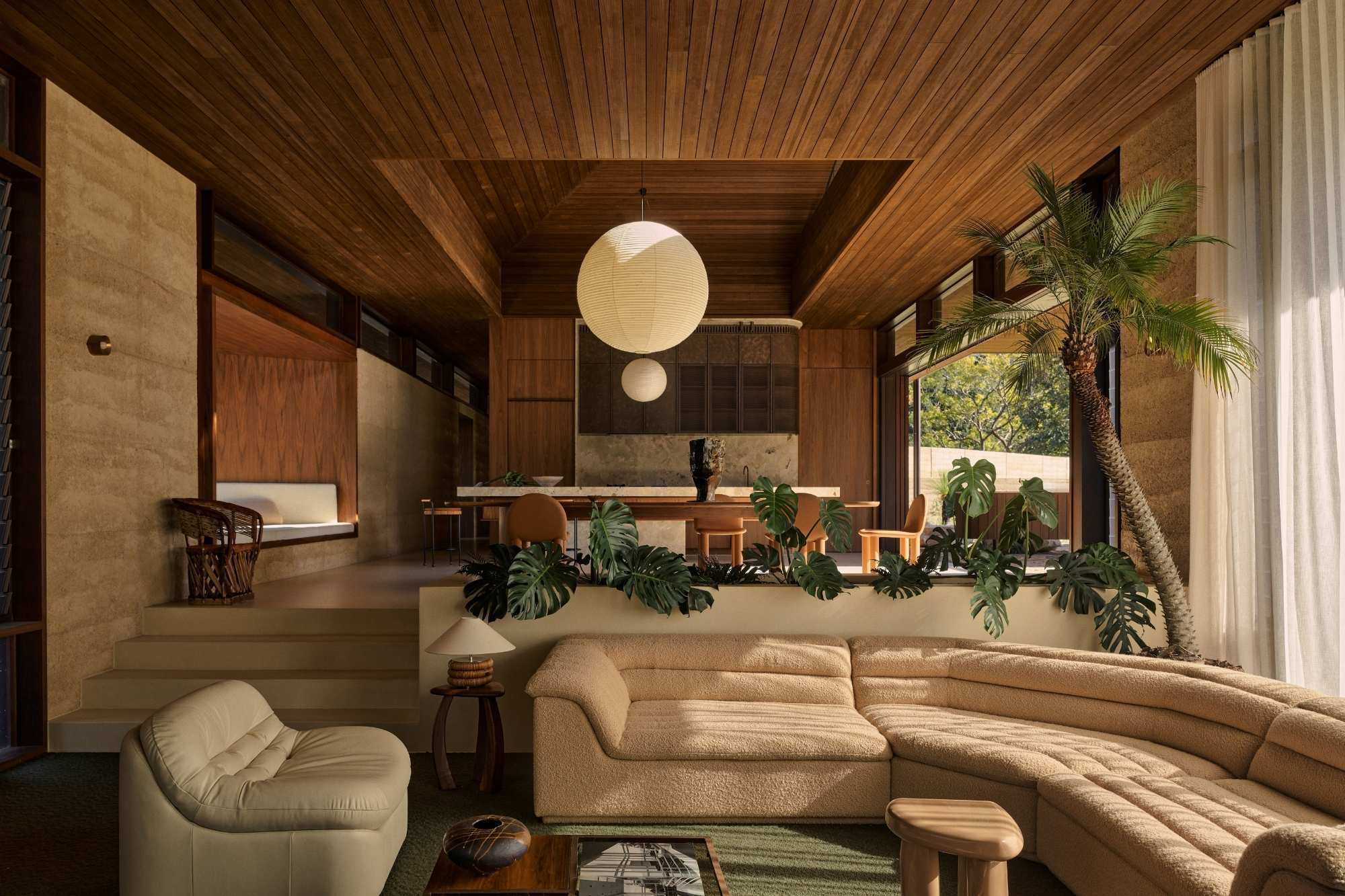
Why choose Abodo Vulcan for a timber ceiling?
Thermally modified for improved stability
Vulcan is made from thermally modified radiata pine. The heat treatment improves dimensional stability and durability without requiring chemical wood preservatives.
Engineered vertical grain for lasting definition
Abodo creates Vulcan’s vertical grain through a patented process of laminating timber into blocks and resawing it across the glue lines. This grain orientation improves stability and reduces cupping. Combined with thermal modification, it helps the boards retain their form.
Plantation timber with a clear source
Vulcan uses FSC® certified Radiata pine, offering an alternative to sourcing from irreplaceable ancient old growth forests.
Frequently asked questions
What timber should I choose for an internal ceiling?
Look for timber panelling suited to overhead installation, with good dimensional stability, a suitable profile and clear fixing guidance. Appearance, coating, indoor conditions and the project’s fire requirements also influence the choice.
Abodo Vulcan® Panelling is designed for applications including internal ceilings, combining a lightweight timber with enhanced stability and Vaaro® Fire is suitable when fire performance is paramount.
Will a timber ceiling make a room feel smaller?
The effect depends on ceiling height, timber colour, board direction and lighting. A darker ceiling can create intimacy, while lighter finishes and good illumination can help preserve a sense of openness. Timber can also be used over one part of a room to define an area without covering the entire ceiling.
Does timber ceiling panelling move or cup?
Timber responds to changes in moisture conditions, so some movement is natural. Thermally modified, vertical grain timber such as Vulcan is engineered to improve stability and reduce the tendency to cup.
Can the same timber be used for an internal ceiling and an external soffit?
Vulcan Panelling is intended for internal panelling and soffit applications. However, an external soffit needs its own exposure, coating and installation assessment. A continuous visual expression can be achieved while tailoring the specification to each location.
What should I check before specifying a timber ceiling in the UK?
Confirm the profile, finish, fixing method, supporting structure and installation requirements. Coordinate lighting, ventilation and access panels early, and obtain the relevant fire-performance documentation for the proposed product and ceiling assembly.
How do you maintain an internal timber ceiling?
Remove dust gently and wash down as needed with gentle detergent, warm water and soft cloth. Re-coat as required to maintain the integrity of the surface coating.